Tibet Flood Victims Have a Right to Be Heard
Researchers said the watershed held 55 glacial lakes and called for stronger upstream warnings and risk assessments before the later flood destroyed the border crossing.
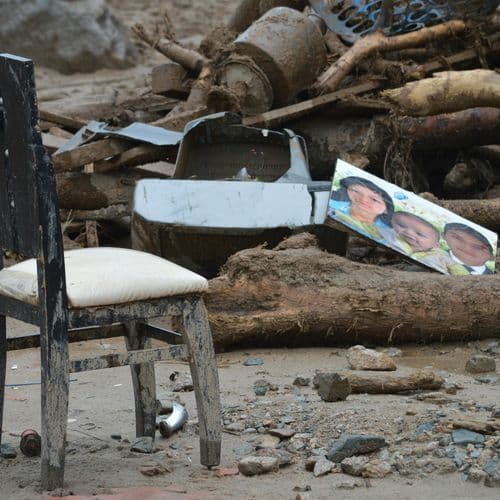
- On August 26, a glacial-related collapse tore through Gyirong Port, a critical crossing between Tibet and Nepal, destroying infrastructure. At least 789 people have died, and more than 3,000 remain missing.
- Scientists identified 55 glacial lakes in the basin, warning that rising temperatures intensify meltwater runoff. Chengdu University of Technology President Xu Qiang noted that retreating glaciers and expanding lakes increase disaster likelihood.
- Authorities have punished at least 10 individuals for "rumormongering" while controlling narratives via Weibo and CCTV. Reports indicate the government uses AI-generated images to depict the disaster, barring independent journalists from interviewing families.
- Trade through Gyirong Port hit 4.25 billion yuan, or roughly $590 million, by 2024, representing nearly 30 percent of all China-Nepal trade. The historically significant port now sits isolated after the Friendship Bridge destruction.
- Taiwan AI Labs founder Ethan Tu criticized the state's framing, writing, "The greatest crime any of us can make is to call a man-made disaster a natural one." Transparency remains limited, leaving families unable to locate loved ones.
11 Articles
11 Articles

Chinese Scientists Flagged Glacial Flood Danger One Year Before Nepal Tragedy
CCTV footage shows people running away as wall of mud and water destroys buildings in a valley at the Nepal-China border, in Gyirong, Tibet region, China, on Aug. 26, 2026. (Social Media/via Reuters)


China defended Monday the transparency of the information disseminated about the devastating flood that hit the border last week...

Tactical drones and rotors unrelentingly beat the fractured artery linking Kathmandu to Tibet, while the lost trail of dozens of foreign expeditionaries has ended up catapulting the tragedy from the rescue pages to the strategic security board. With at least 800 dead and 3,000 missing, defense observers and Nepalese commanders accuse Beijing of applying an informative lock by classifying cross-border hydrometry as a military secret, depriving th…

For journalists it is hardly possible to report on the consequences of the disaster in Tibet. China's authorities block, censor and control the work of reporters. Nor do they answer the question why the official number of victims is so radically lower than in Nepal.

More than 900 people died in the sudden floods that reached the border between the two countries last week.
Coverage Details
Bias Distribution
- 80% of the sources lean Right


Factuality
To view factuality data please Upgrade to Premium