Archeological ‘breakthrough’ could confirm origins of Paris: ministry
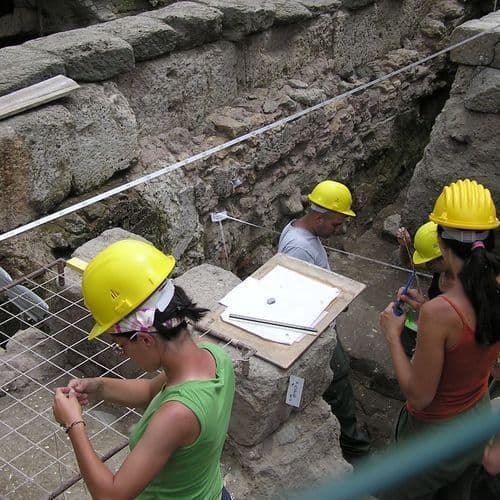
Archaeologists say the 65-foot wall bears fire damage and artifacts that could link it to Lutetia, the ancient settlement of Paris.
- Archaeologists unearthed a 20m-long charred wall near Notre-Dame in France, a discovery that could confirm Paris was built upon the ruins of the ancient Gallic Lut.
- For centuries, the location of Lut remained debated, with some researchers hypothesizing it was in Nanterre; the Parisii tribe historically burned their fortified town in 52BC to prevent Roman capture.
- Heritage curator Doroth Chaoui-Derieux dated the wall's wooden elements to between 200BC and 10BC, while excavations also revealed a two-meter-thick artificial platform composed of sand and gravel.
- Edward Lumley, regional director of cultural affairs, stated 'Keeping this wall on site is not possible' due to fragility, so specialists will create a moulding for study and reconstruction.
- Regional curator Stphane Deschamps noted the discovery 'fills an archaeological vacuum,' effectively ruling out competing location theories and confirming Paris sits atop the ancient Gallic settlement.
114 Articles
114 Articles

Ancient Parisians Torched Their Own City to Stop Caesar. Archaeologists May Have Found the Scorch Marks
For over two millennia, the ancient settlement of Lutetia bore witness to the city that became Paris. But its precise location remained uncertain for centuries.

 The Local - Fr
 The Local
'Major archaeological breakthrough' could confirm origins of Paris
An ancient wall discovered in central Paris was hailed as a "major breakthrough" this week, as the archaeological find may have settled a long-standing debate about the location of the city's original settlement.

Archaeologists have discovered a wall about 20 meters long in the middle of Paris. The discovery provides a new clue in a decade-old mystery about the origins of the city.


A stone and wood wall of about 20 meters long was found.It could be part of the fortifications of the ancient Lutecia de los Parisii, a Gala tribe that inhabited the region before the Roman conquest.
Coverage Details
Bias Distribution
- 40% of the sources are Center


Factuality
To view factuality data please Upgrade to Premium