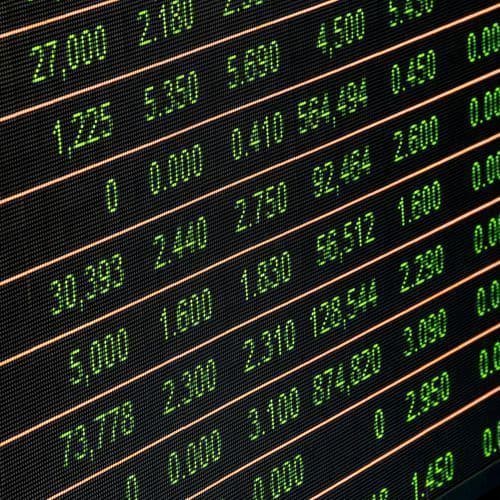
U.S. Stocks Give Back Ground After Early Move To The Upside
A handful of megacap stocks kept the S&P 500 afloat as breadth weakened, with Morgan Stanley saying only 49% of stocks trade above their 200-day average.
- On Wednesday, the S&P 500 fell 0.3% to 7,651.54, ending at its lowest level as major averages retreated throughout the session. About three-quarters of stocks in the benchmark index fell this month.
- Morgan Stanley analysts reported Monday that the share of S&P 500 stocks trading above their 200-day moving average fell to 49% from roughly 75% during the summer, signaling narrowing market breadth.
- Market breadth improved over summer but reversed after Fed Chair Kevin Warsh's late August address at Jackson Hole, where his comments prompted markets to price in more hawkish central bank policy.
- Chris Toomey, Morgan Stanley managing director, said on CNBC's "Closing Bell" Tuesday that investors are "just being more defensive in getting out of those other names" and moving away from higher-beta stocks.
- Strategist Michael Wilson advises investors to "stick with large cap quality and add to riskier stocks in October," maintaining that stronger earnings will drive market narrative for 2026.
9 Articles
9 Articles

The American stock indices did not show a single movement in the outcome of the bid on Wednesday.


U.S. Stocks Give Back Ground After Early Move To The Upside
Stocks moved mostly higher in early trading on Wednesday but gave back ground over the course of the session. The major averages pulled back well off their highs as the day progressed, with the Dow and S&P 500 sliding into negative territory. The Dow and the S&P 500 ended the session at their worst levels of the day.

The leading stock markets closed mixed on Wednesday: the Hungarian stock exchange ended trading with a significant drop, primarily due to the weakness of OTP and MOL. In the US market, the Dow Jones and S&P 500 closed in the red, while the Nasdaq managed to rise. US PCE inflation was more favorable than expected and core inflation also slowed down, while government bond yields rose. We will also address similar topics at our Portfolio Investment…


The index is deceiving: Most S&P 500 stocks fell in September. The S&P 500 fell only half a percent in September, but behind the seemingly calm month was a much weaker picture, as 78% of the index stocks ended the month in the red. Stock index, financial analysis, Standard & Poor'S 500, finance, Investing, Stock market, Information technology, Stock, Federal Reserve, Nvidia, US stock market.
Coverage Details
Bias Distribution
- 60% of the sources are Center


Factuality
To view factuality data please Upgrade to Premium