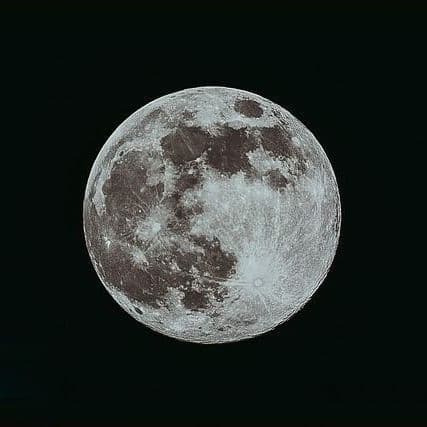
Scientists may have found the planet that made the Moon
Researchers used Apollo lunar samples and isotope data to show Theia likely formed inside Earth’s orbit before the Moon-forming collision.
9 Articles
9 Articles


The temperature of the Earth and Theia would have been key to determining how the debris was dispersed and how long it took for the Moon to form.

Scientists Are Still Trying To Understand How the Moon Formed
The Earth and the Moon have nearly identical isotopic compositions, and the Giant Impact Hypothesis strives to explain this. New research into the ancient impact shows how the temperature of both worlds, and how it affects the strength of the materials involved in the collision, shaped the outcome, including the isotopic compositions.

Scientists may have found the planet that made the Moon
About 4.5 billion years ago, a colossal impact between the young Earth and a mysterious planetary body called Theia changed everything—reshaping Earth, forming the Moon, and scattering clues across space rocks. By examining subtle isotopic fingerprints in Earth and Moon samples, scientists have reconstructed Theia’s possible composition and birthplace.

Five small hours: this is the time it would have taken our natural satellite to form, after the titanium collision that gave rise to it. On the cosmic scale, it is ridiculously short.

Researchers say the Moon, Earth's only satellite, formed within just five hours of a massive impact with the ancient Earth.
Coverage Details
Bias Distribution
- 50% of the sources are Center, 50% of the sources lean Right


Factuality
To view factuality data please Upgrade to Premium