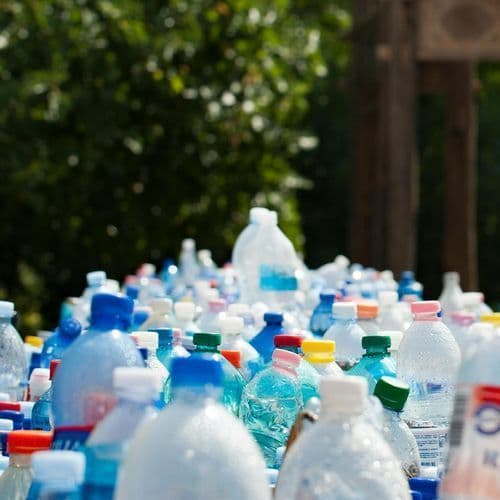
Scientists Have Turned Plastic Waste Into Edible Cookies
Engineered yeasts turn PET and crop waste into edible ingredients for 3D-printed cookies that researchers say could serve emergency and space rations.
- Researchers at Southern Illinois University Carbondale are turning plastic bottles into protein-rich cookies using genetically engineered yeasts. Associate professor Lahiru Jayakody and graduate student Sandhya Jayasekara transform PET plastic into edible ingredients for a 3D-printed Bite.
- This project originated from NASA research on feeding crews during deep-space missions. Scientists sought to develop technologies for plastic upcycling, stating, "We were trying to develop technologies for plastic upcycling to make more valuable products."
- Researchers break down plastic and biomass using heated, pressurized water through oxidative hydrothermal dissolution, a technique developed by SIU Carbondale geology professor Ken Anderson. Genetically engineered yeasts then consume these compounds to produce proteins and acids for the cookies.
- While data indicates the cookies are safe, researchers await institutional permission for formal taste tests. Early aroma feedback has been encouraging, though Jayakody noted, "Microbes are very clever. So, we are using their traits to solve the problems we created."
- Future iterations aim to create self-contained systems for environments like submarines or spacecraft. This approach could simultaneously reduce plastic pollution and provide food options in resource-limited situations where traditional farming or supply chains are difficult to sustain.
13 Articles
13 Articles

At first glance it looks like a regular cookie: small, round and toasted. But a part of the carbon it contains was trapped before in a plastic bottle on the way to garbage. It is not a plastic crushed and mixed with flour, an image as disturbing as it is wrong. The process is much more sophisticated and starts by dismantling the material at the molecular level so that microbes rebuild it in the form of food. The prototype is called μBites (prono…

Scientists turn plastic bottles into vanilla cookies for emergency space rations
Scientists at Southern Illinois University Carbondale say a future emergency snack — or even a space ration — could begin as a plastic bottle after engineering yeasts that can turn plastic waste and crop leftovers into protein-rich cookies, a concept that could reduce pollution while creating food for resource-limited situations. Convincing people to actually eat them, however, may prove to be the harder task. Here's what to know The work grew o…

Looks like an idea coming out of a science fiction film, picking up a used plastic bottle, collecting agricultural waste and turning it all into a cookie with proteins, vitamins and even vanilla flavor.


Recycling in a nutritious way: A novel process converts plastic waste into edible, protein-rich biscuits – using specially modified yeasts.

Scientists Have Turned Plastic Waste Into Edible Cookies
[Image: Pixabay] If one biscuit is just never enough and you find yourself polishing off a whole packet, those days might be almost over, because scientists have made edible cookies out of plastic waste. So, while they are great when it comes to recycling and food insecurity, they probably won’t be the most moreish considering the contents. A team of researchers at Southern Illinois University Carbondale just demonstrated that it was possible to…
Coverage Details
Bias Distribution
- 62% of the sources lean Right


Factuality
To view factuality data please Upgrade to Premium