From the Lockerbie Bombing to 9/11: How Attacks on Flights Defined US Air Travel
Aviation security grew after multiple attacks exposed gaps, leading to reinforced cockpit doors, baggage screening, body scanners and other layers, officials said.
- In July 2025, the Trump administration ended the shoe screening requirement that the Transportation Security Administration had enforced since 2001. The change reflects how airport security has shifted toward layered defenses addressing evolving threats.
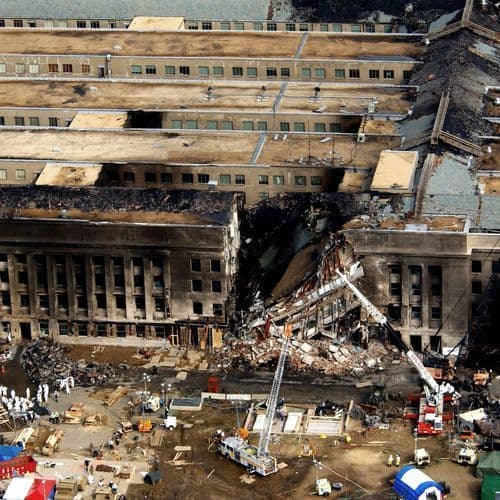
- The 1988 bombing of Pan Am Flight 103 over Lockerbie, Scotland, killed 259 people aboard and 11 on the ground, spurring major security overhauls. September 11, 2001, attacks then forced 100% checked luggage screening and reinforced cockpit doors to counter suicide hijackers.
- Subsequent plots, including Richard Reid's 2001 shoe bomb attempt and the 2009 incident on Northwest Airlines Flight 253, drove further restrictions. TSA responded with the 3-1-1 liquid rule and full-body scanners to detect non-metallic explosives.
- Security screening continues evolving with new technology as TSA expands facial recognition to verify passenger identities. As of last month, newly manufactured airplanes must feature a retractable security gate between cabin and cockpit.
- Sheldon Jacobson, a University of Illinois professor, emphasizes that "any one layer of security can be breached," but layered defenses create a "very resilient system." Authorities must balance finite resources against constant uncertainty in preventing new attack scenarios.
22 Articles
22 Articles

From the Lockerbie bombing to 9/11: How attacks on flights defined US air travel - Regional Media News
Taking a commercial flight from a U.S. airport generally requires a boarding pass to get anywhere near a gate, security screening controlled by the federal government and careful attention to the contents of carry-on bags. It wasn't always this way. Travelers once passed through security [...]

From the Lockerbie bombing to 9/11: How attacks on flights defined US air travel – WTOP News
Taking a commercial flight from a U.S. airport generally requires a boarding pass to get anywhere near a gate, security screening controlled by the federal government and careful attention to the contents of carry-on bags. It wasn’t always this way. Travelers once passed through security checkpoints staffed by private contractors selected by airlines. Full-sized bottles...
 Associated Press News


From the Lockerbie bombing to 9/11: How attacks on flights defined US air travel
The aviation security system that travelers encounter at U.S. airports was built layer by layer, often after attacks or attempted attacks exposed new vulnerabilities.
Coverage Details
Bias Distribution
- 41% of the sources lean Left


Factuality
To view factuality data please Upgrade to Premium