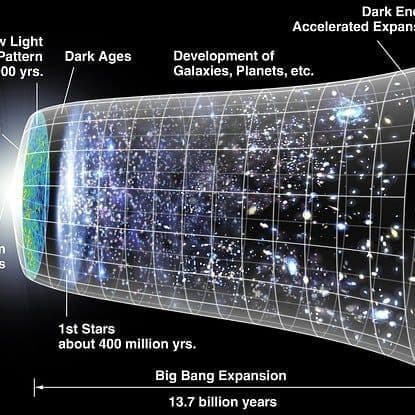
Scientists Smash Atoms Together to Create 'Little' Big Bangs
Researchers found neon-20 and oxygen-16 collisions can produce quark-gluon plasma, challenging the view that only heavy nuclei can create it.
4 Articles
4 Articles


Researchers used the CERN particle accelerator to collide light atomic nuclei; this experiment reveals unprecedented details about the primordial matter and geometry of the nascent universe

Scientists smash atoms together to create 'little' big bangs
Recreating the universe’s earliest moments could help us learn more about the elusive quark-gluon plasma. The post Scientists smash atoms together to create ‘little’ big bangs appeared first on Popular Science.

Bowling-Pin-Shaped Nuclei Recreate Little Big Bang, Revealing the
Physicists have recreated a fleeting state of matter believed to have filled the Universe moments after the Big Bang—by colliding atomic nuclei far smaller than the heavy lead ions traditionally used in such experiments. The result, achieved by the international ALICE collaboration at CERN, provides new evidence that quark-gluon plasma can emerge in collisions involving […]
Coverage Details
Bias Distribution
- 67% of the sources are Center


Factuality
To view factuality data please Upgrade to Premium