Astronomers Just Caught a Giant Planet in the Act of Forming
The Jupiter-size world is less than 1 million years old and remains embedded in a dusty disk, challenging planet-formation models.
- On September 16, 2026, astronomers confirmed Elias 2-24 b, the youngest known exoplanet at less than 1 million years old, located 454 light-years from Earth.
- About 10 years ago, the Atacama Large Millimeter/submillimeter Array detected a gap in the protoplanetary disk; researchers later confirmed the planet using archival Keck Observatory data from 2018 and 2020.
- Lead researcher Andrea Bernardi of Universidad Diego Portales estimated the planet at 1.9 to 4 Jupiter masses with temperatures reaching 1,600 Kelvin, contradicting formation models requiring 5 million years.
- "We usually hear about telescopes working separately, but this confirmation was possible only by using multiple telescopes together," Bernardi said, highlighting the collaborative data synthesis required.
- Advanced technology on NASA's Nancy Grace Roman Space Telescope, launched August 30, will enable detection of dim planets currently difficult to separate from intense stellar glare.
16 Articles
16 Articles

A giant newborn planet offers astronomers an exceptional opportunity to study how worlds are built

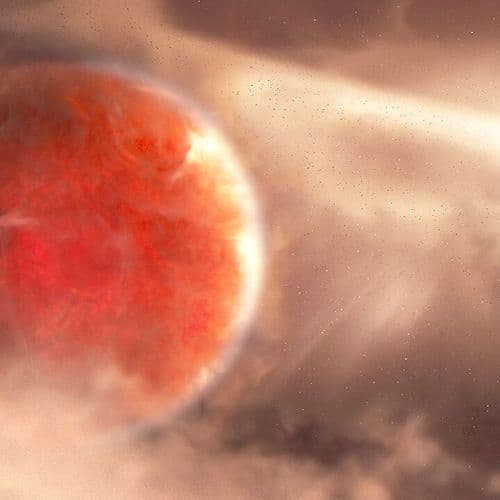
Elias 2-24 b is less than a million years old, about as massive as Jupiter, and is still in the process of forming, continuing to gather gas and dust around its young star.

Astronomers Confirm Youngest Exoplanet Ever Found
Named Elias 2-24b, the newly confirmed exoplanet is estimated to be less than 1 million years old -- so young it is likely still gaining mass from the protoplanetary disk surrounding its star. The post Astronomers Confirm Youngest Exoplanet Ever Found appeared first on Sci.News: Breaking Science News.

Baby exoplanet: Astronomers find the youngest world yet
View larger. | Artist’s concept of Elias 2-24 b, a baby exoplanet less than a million years old. It sits within a prominent gap in the disk of gas and dust surrounding its star, and it’s pulling in material from this disk. Image via W. M. Keck Observatory/ Adam Makarenko/ NASA. Planets start their lives as “babies,” just like we do. Now scientists have discovered the youngest-known exoplanet so far, Elias 2-24 b. Elias 2-24 b is less than a mil…

Astronomers Directly Image the Youngest Exoplanet Ever
Most exoplanets we find have been around a long time. They’ve cleared out their orbital path (one of the requirements of planethood, as fans of Pluto well know), have their own gravitational pull, and in many cases shine with their own infrared light. But it takes a long time to get to that point - finding “young” planets is much harder. But a new paper available in The Astrophysical Journal Letters by a research team led by Andrea Bernardi of D…

Astronomers Just Caught a Giant Planet in the Act of Forming
Astronomers have confirmed the youngest known planet, a Jupiter-size baby world less than a million years old that formed far faster than expected. Astronomers have confirmed the youngest known planet ever observed, a world less than 1 million years old that is still surrounded by the material from which it formed. Known as Elias 2-24 [...]
Coverage Details
Bias Distribution
- 67% of the sources are Center


Factuality
To view factuality data please Upgrade to Premium