All Set for the Launch of the Roman Telescope, Capable of Observing 2,000 Galaxies
8 Articles
8 Articles

NASA plans to launch its next space observatory on Sunday aboard a SpaceX rocket. The telescope will look for new exoplanets, investigate the origin of energy and dark matter, and map millions of galaxies, among other objectives Read


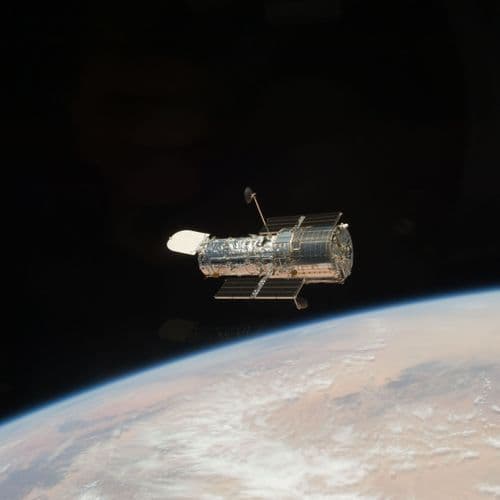
Miami (USA), Aug 29 (EFE).- NASA has everything ready for the launch this Sunday of the Nancy Grace Roman telescope, the largest panoramic observatory ever built, which will monitor more than 2,000 galaxies thanks to a field of vision 100 times larger than Hubble. The launch, aboard a Falcon rocket [...] The All-ready entry for the launch of the Roman telescope, capable of observing 2,000 galaxies was first published in HolaNews.

The astronomy of the next decade has a woman’s name. And that name is Nancy Grace Roman, the brilliant American scientist without whom the famous Hubble space telescope would never have seen the light. Roman, who in 1959 shattered the glass ceiling by becoming the first woman to hold an executive position at NASA as head of Astronomy, dreamed his whole life of a swarm of space observatories that would guard the free cosmos of the mist imposed by…

Miami (EFE).- NASA has everything ready for the launch this Sunday of the Nancy Grace Roman telescope, the largest panoramic observatory ever built, which will monitor more than 2,000 galaxies thanks to a field of... The Post Telescope Roman, capable of observing two thousand galaxies, launches this Sunday appeared first on N Digital.

Miami (USA) – NASA is all set for the launch this Sunday of the Nancy Grace Roman Telescope, the largest panoramic observatory ever built, which will monitor more than 2,000 galaxies thanks to a field of view 100 times larger than that of the Hubble Space Telescope. Launch aboard Falcon Heavy from Florida. […]

MIAMI- NASA has everything ready for the launch this Sunday of the Nancy Grace Roman telescope, the largest panoramic observatory ever built, which will monitor more than 2,000 galaxies thanks to a field of vision 100 times larger than that of Hubble.
Coverage Details
Bias Distribution
- 75% of the sources lean Right


Factuality
To view factuality data please Upgrade to Premium